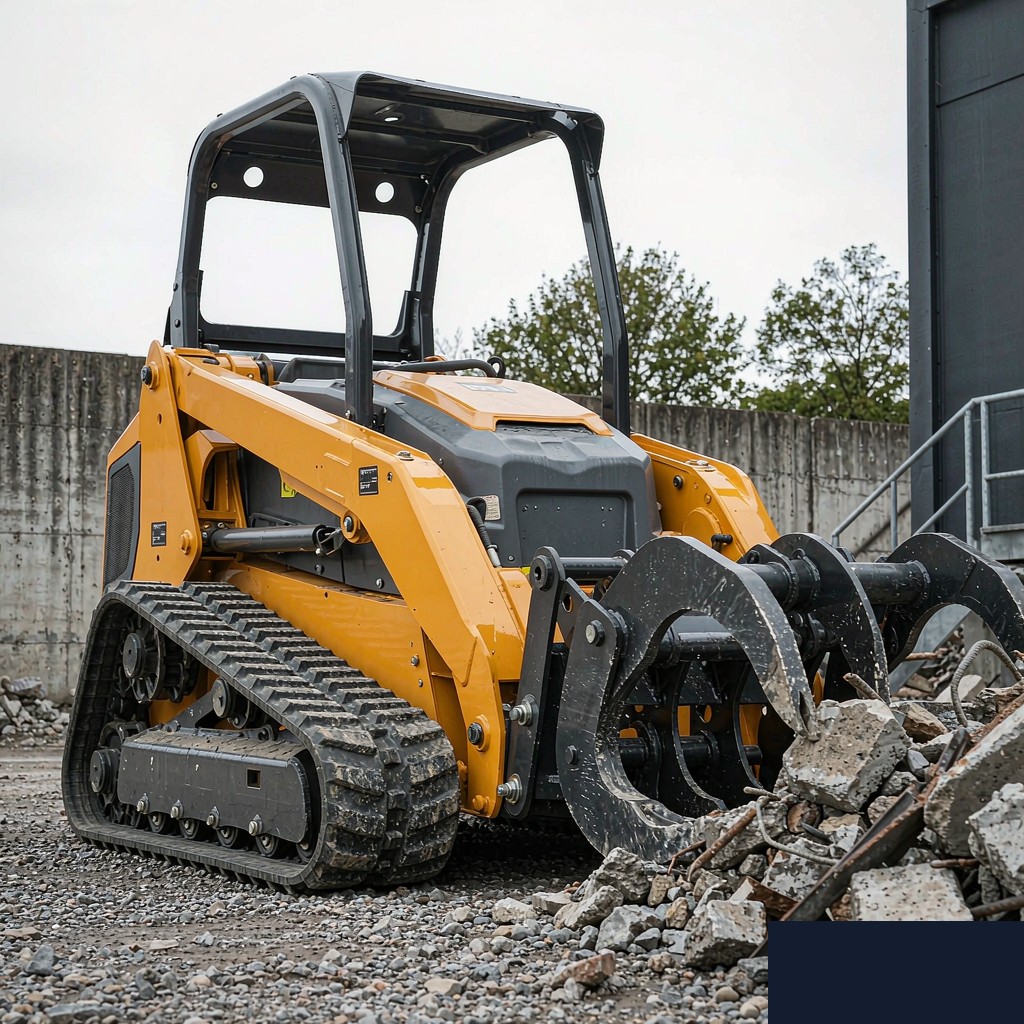
Why the Attachment List Should Decide the Loader, Not the Other Way Round
Most B2B buyers searching for a skid steer loader compare engine power and price first, then treat attachments as an afterthought. That order gets fleets into trouble. The global skid steer attachment market is estimated at roughly USD 3 billion in 2026 and is projected to keep growing at 6–7% annually through 2033, precisely because contractors, rental fleets and municipalities now buy one loader as a year-round platform instead of three single-purpose machines. Industry research puts US attachment demand near USD 1.05 billion in 2026, while China remains the fastest-growing market as attachment penetration is still low — two facts that matter if you import machinery to serve either region.
The practical rule: write down the three to five jobs that generate 80% of your revenue, price the attachments that do those jobs, and only then choose a carrier that runs all of them at rated performance. A loader that cannot power your heaviest attachment at spec is a discount that becomes a refund claim. This guide walks through the four compatibility checks — hydraulic flow, rated operating capacity, quick-attach interface and undercarriage — then maps them onto LUYRN’s crawler skid steer range.
Know Each Attachment’s Hydraulic Appetite Before You Negotiate
Every powered attachment draws oil from the loader’s auxiliary hydraulic circuit. The two numbers that matter are flow (GPM / L/min) and pressure (psi / bar). Matching them wrong is the single most common import mistake, because a machine can look identical on a spec sheet while powering completely different tool classes. Use this industry flow chart as your baseline, then verify exact ratings against the attachment manufacturer’s data:
| Attachment | Typical Flow | Typical Pressure | Runs on Standard Flow? | Common B2B Applications |
|---|---|---|---|---|
| General-purpose bucket | Non-hydraulic | — | Yes | Loading, backfilling, grading |
| Pallet forks | Non-hydraulic | — | Yes | Palletized freight, job-site logistics |
| Hydraulic grapple | 10–25 GPM (38–95 L/min) | 2,000–3,500 psi | Yes | Brush, logs, scrap and debris sorting |
| Auger drive | 8–35 GPM (30–130 L/min) | 2,000–3,500 psi | Yes — select motor size | Fencing, footings, tree planting |
| Hydraulic breaker | 8–30 GPM (30–115 L/min) | 1,800–3,500 psi | Yes (10–25 GPM class) | Concrete, asphalt, rock demolition |
| Trencher | 13–40 GPM (50–150 L/min) | 2,500–3,500 psi | Light models only | Utility trenches, irrigation, drainage |
| Cold planer / forestry mulcher | 20–45+ GPM (75–170+ L/min) | up to 4,000 psi | No — high flow required | Road milling, land clearing |
Buckets and forks generate the daily revenue, but grapples, augers and breakers command premium rental rates — market data consistently shows buckets, pallet forks, augers and grapples as the strongest sellers, with hydraulically powered demolition and forestry tools gaining share. If your work mixes concrete demolition with loading, you need a carrier that runs a breaker on Monday and a bucket the rest of the week without modification.
Standard Flow vs High Flow — and Why Mismatching Destroys Both Machine and Attachment
Skid steer auxiliary hydraulics fall into three practical tiers. Standard-flow systems deliver roughly 17–24 GPM at 3,000–3,500 psi and comfortably power 4-in-1 buckets, hydraulic hammers, augers, trenchers and grapples. High-flow systems raise flow to about 30–38 GPM — Bobcat’s current high-flow packages deliver 26.9–36.6 GPM depending on model — while enhanced high-flow versions push pressure toward 4,000 psi for large cold planers and mulching heads.
The physics is simple. Hydraulic horsepower equals GPM × PSI ÷ 1,714. A standard-flow circuit moving 20 GPM at 3,000 psi delivers roughly 35 hydraulic horsepower; a high-flow circuit at 35 GPM and 3,500 psi delivers about 71.5. You cannot fake that difference with throttle position — running a high-flow attachment on a standard-flow machine produces poor results and, as CASE’s guidance notes, can damage the attachment, the loader, or both through chronic overheating and cavitation.
Three procurement checks follow from this:
- Get the actual auxiliary flow and pressure at the quick-attach couplers in writing — not the engine rating, and not “high flow available” marketing language. LUYRN documents auxiliary circuit specifications per machine before contract.
- Ask whether a case-drain line is available if your attachment plan includes continuous-duty tools such as forestry cutters, which need it to avoid seal damage.
- Train operators to work 5–10% below the attachment’s maximum pressure for optimum cooling and component life — most pro-grade attachments ship with a pressure gauge for exactly this reason.
Rated Operating Capacity vs Real Attachment Weight
The second compatibility check is arithmetic. Rated Operating Capacity (ROC) is the safe working load the machine can carry — and it is consumed by both the payload and the attachment’s own dead weight. A grapple frame adds 250–400 kg before you pick up a single log; pallet forks add 150–250 kg; a breaker adds several hundred more depending on carrier class.
Worked example with the HL65 6.5-ton crawler skid steer: rated load 2,000 kg. Fit a 350 kg hydraulic grapple and your remaining payload is 1,650 kg, not 2,000 kg. Spec the machine assuming worst-case attachment plus heaviest regular load, then keep 15–20% margin for attachments you will rent or add later. Lift height completes the picture for logistics buyers — the HL65 lifts to 3,800 mm, enough to top-load most regional trucks and stack standard big-bag pallets two high on level ground.
ROC ratings, tipping-load percentages and undercarriage selection are covered in depth in our skid steer ROC procurement guide; the wheeled-versus-tracked decision is analyzed separately in our 2026 wheeled vs tracked skid steer comparison.
Quick-Attach Interfaces: The Import Details That Cause Port Delays
The universal four-point quick-attach plate has become the de facto standard geometry across OEM platforms, which is why a single attachment inventory can serve mixed fleets. But “universal” still hides three details that routinely delay imports and rack up workshop costs after delivery:
- Plate geometry drawing. Request the quick-attach plate drawing with hole centers and lock-pin dimensions, and match it against the drawings of attachments you already own or plan to buy regionally.
- Hydraulic couplers. Confirm coupler type (flat-face ISO 16028-style is the safe default), quantity — one circuit for tilt-only tools, two for rotating grapples and side-shift planers — and thread standards so your local hose supplier can service them.
- Electrical power. Attachments with solenoid controls (rotating grapples, planer side-shift) need 12V or 24V supply at the plate. Confirm voltage and connector before shipment, not after.
Compliance wraps around the interface itself: in Europe, quick-coupler systems fall under the EU Machinery Directive and CE marking; in the US, OSHA expects positive attachment locking on lifting work. Ask your supplier for locking-mechanism photos and, ideally, a load-test video with the attachment class you plan to run.
Matching LUYRN Loaders to Your Attachment Plan
LUYRN supplies three skid steer classes covering the attachment plans most B2B buyers actually run. All are CE-certified, factory-direct with OEM/ODM options and exported FOB China with worldwide shipping:
| Model | Class | Key Specs | Best Attachment Fit |
|---|---|---|---|
| LUY-SSL-035 3.5-Ton Crawler | Compact tracked | Diesel, pilot hydraulic controls, low ground pressure | Fencing augers, pallet forks, light grapple work on mud and gravel where wheeled machines spin |
| HL65 6.5-Ton Crawler | Mid tracked | 2,000 kg rated load · Changchai 4-cylinder 36.8 kW · 3,800 mm lift · 0–8 km/h · rubber or steel tracks | Factory-matched five-family plan: bucket, pallet forks, grapple, auger, breaker — the demolition-plus-loading combination |
| LUY-SSL-080 8-Ton Wheeled | Heavy wheeled | 4WD, articulated steering, fast travel on firm ground | High-cycle pallet and bucket logistics in yards, ports and industrial parks where speed between lifts matters |
Read this table against your attachment list. If breakers and augers dominate, the HL65’s mid-class hydraulics and track stability carry the heaviest tool without tipping margins. If your attachment plan is pallets and buckets on paved logistics yards, the wheeled LUY-SSL-080’s travel speed pays for itself in cycle counts. For tight landscapes and municipal work on soft ground, the LUY-SSL-035 keeps ground damage — and re-turfing liabilities — minimal. Buyers comparing loading specifications across the wider loading class can also review our wheel loader procurement guide for bucket-capacity and transmission benchmarks.
Supplier & Pre-Shipment Checklist for Attachment-Ready Loaders
Before releasing the balance payment, confirm every line below in writing. These are the items that separate an attachment-ready loader from an expensive yard ornament:
- Written auxiliary hydraulic flow and pressure at the quick-attach couplers (GPM/L/min and psi/bar), not engine brochure numbers
- Confirmation of standard-flow or high-flow circuit, and whether a second auxiliary circuit can be added
- Case-drain port availability for continuous-duty attachments
- Quick-attach plate drawing with lock-pin geometry, plus locking-mechanism photos (OSHA / EU Machinery Directive alignment)
- Hydraulic coupler type and count (flat-face ISO 16028-style, 1 or 2 circuits)
- 12V/24V solenoid power supply at the plate, with connector standard
- List of factory-available attachments — for the HL65: bucket, pallet forks, grapple, auger and breaker — and whether OEM/ODM attachment sourcing is offered for tools you need localized
- Spare hose, coupler and wear-part kit packed in the export crate; market reports flag steel-price volatility and supply-chain disruptions as ongoing risks, so long-lead attachment quotes are time-limited
Frequently Asked Questions
Can I run a cold planer or forestry mulcher on a standard-flow skid steer?
No. These production tools typically demand 20–45+ GPM and, in enhanced packages, up to 4,000 psi. A standard-flow machine running 17–24 GPM will overheat the circuit, deliver a fraction of rated productivity and can damage both the attachment and the loader. Choose a different tool class or a high-flow carrier.
What hydraulic flow do augers and breakers actually need?
Auger drives typically require 8–35 GPM and breakers 8–30 GPM at 1,800–3,500 psi depending on motor size. Both run on standard-flow systems — the trick is specifying the right motor displacement for your machine’s flow so drilling and hammering cycles stay at rated speed without starving other functions.
Will a universal quick-attach plate fit any attachment I buy later?
Mostly yes — universal plate geometry has standardized across OEM platforms — but verify three things before ordering: the plate drawing of the new attachment, the hydraulic coupler type and count, and the solenoid voltage. Regional aftermarket attachments are the usual source of mismatches, not the plate itself.
How much does attachment weight reduce my real payload?
Subtract the attachment’s dead weight from the machine’s ROC before calculating payload. On the HL65’s 2,000 kg rated load, a 350 kg grapple leaves 1,650 kg for material. Always size for worst-case attachment plus heaviest regular load with 15–20% margin.
Which LUYRN skid steer should I buy first?
Map your attachment plan to ground conditions. Breakers, augers and grapples on mixed or soft sites: the HL65 crawler. Pallet and bucket logistics on firm yards: the LUY-SSL-080 wheeled. Tight landscaping and municipal work where ground protection matters: the LUY-SSL-035. Many fleets end up pairing a tracked unit with a wheeled unit as volume grows.
Get a Loader and Attachment Match From LUYRN
Send LUYRN your attachment list and site conditions, and our engineers will confirm hydraulic flow, ROC margins and quick-attach compatibility before you commit — with OEM/ODM options, factory-direct FOB China pricing and worldwide shipping. Email info@luyrn.com for a specification sheet, lead time and a matched loader-plus-attachment quotation, or start from the HL65 crawler skid steer product page to review the full spec table.